Vegetables
Not sure how fast to expect your Zucchini to grow ? This particular veg has many ontogeny point , and can motley in time to maturity calculate on how it ’s grown . In this article , gardening expert Liessa Bowen examine the growth stages of zucchini industrial plant and how tight you’re able to expect it to yield yield in your garden this time of year .
contentedness

When you think of a zucchini , you credibly think of a farsighted , colored - unripened , soft - skinned squash , but this is only one of manyvarieties of summertime squash . All summertime squash share the same basic growth requirement . And they all grow fast ! So what are the 9 courgette ontogeny stages , and how long does it take them to hit maturity ?
What is Zucchini?
courgette are typically oblong and dark green , or they can be patterned in fleeceable and white . But there are also lowly orotund zucchini in shade of unripe and xanthous . Yet other courgette are oblong and bicolored : half yellow and half greenish !
yellow-bellied squash vine is oblong and scandalmongering with narrower , slightly curved neck . Patty Pan squashis flattened and round off with chunky edges and can be found in lily-livered , green , and white-hot shade .
9 Growth Stages of Zucchini Plants
A zucchini seed takes50 to 60 daysto sprout , develop , formulate , and produce its first yield . In ideal originate shape , your plants will strive maturity within this timeframe . If conditions are n’t ideal , such as cooler conditions make obtuse works outgrowth , it may take your plants a small longer to attain fruiting maturity .
allow ’s dig a little profoundly into the details of each ontogeny stage of a zucchini plant and see what you’re able to expect during each stage .
Selecting Seeds
If you ’ve ever put up in front of a seed display render to opt one seed packet boat from a vast array of beautiful options , feeling paralyzed with irresolution , you are for certain not alone ! You may recollect that all zucchinis are the same , but there is a vast diversity of cultivars . You may bed the exact variety you are seem for or want to browse before take something for your garden .
take seed can be very enjoyable or nerve-wracking , depending on how you look at it . First , be naturalistic . courgette can grow to be very large plants . If you have way for only one or two plants , corrupt just one pack of source , perhaps of amore thickset miscellanea . If you have a lot of space to dedicate to courgette , you could try a couplet of different potpourri .
Buy your seeds from a reputable seed source and plant them within 4 year . Using seminal fluid within two long time will yield the best results . Seeds will lose viability as they get on , and the germination rate will wane . Store your seeds in a cool , wry positioning . When you examine them , they should appear fresh and fast . If your seeds become damp , maudlin , or moldy , throw them out and buy fresh ones .

Sowing Seeds
Once you ’ve selected the seeds you want , you may start out thinking about found them . courgette can be started indoors or outdoors . It is generallyrecommended to lead off them out of doors , directly seeded where you want them to grow .
you’re able to get a slim head start by planting seeds indoors , but courgette do n’t always transfer well , and they will readily germinate out of doors , so this is still the favourite option .
Starting Inside
If you prefer to start out your courgette seeds inside , start them in mid - to - late give . Allow anywhere from3 to 4 weeks between sowing and your planned transplant date . So if you want to plant them outside in mid - July , start out them at bottom towards the closing of June . design to wait until the temperatures outdoors have warmed and the soil temperature isat least 60 degreesbefore transplantation .
The minimal supplies you need will be :
courgette does n’t care any root affray , and using peat commode will greatly help oneself minimize soil and take root disturbance during transplanting . You ’ll desire to carefully take away or open up the bottom of the peat pot when engraft just to assure the roots can freely reach the rest of the grime !

meet your peat pots with free , well - drained seed - depart soil . Sow seeds 1 inch deepand cross them loosely with dirt . plant life 2 to 3 semen per pot and keep them in a ardent , well - ignite location . Give the grease a thoroughgoing watering to get them started , and then keep the soil moist until the seeds sprout .
Sowing Outside
Starting zucchini seeds outdoors is the preferred method acting . Wait until after any probability of spring frost has pass before you embed your seeds alfresco . But do n’t be in too much of a hurry to get your semen in the ground in other springiness . Some cuss , like squash vine borer , can be more of a trouble early in the season . If you wait until mid - summertime to institute , you will still have sentence to grow a hefty crop with less risk of these pesky insects .
Prepare your garden secret plan . Plant in a location with full sun and high - quality , well - drained soil . Sow your seed 1 inch deep directly into the garden ground . Cover them loosely with fresh soil . Sow one cum every 3 to 4 column inch if you want a quarrel of zucchini . you could also sow them in low mounds of territory with 3 to 4 seeds per mound ( or hill ) space 3 foot apart .
If you seed your seeds outdoors before in the spring , cover them with a small portable greenhouse or floating row cover to help maintain some lovingness . Zucchini isvery sensitive to cold , and you do n’t want to kill your seminal fluid as they ’re trying to sprout or seedlings as they ’re trying to grow . Keep them moist if you sow them later in the season when it ’s already red-hot outside . You will belike need to water them every day .

Germination
Germination is the point all seeds go through to start spring up a new plant . To burgeon forth , a seed needs three canonical elements :
Some seeds need extremely specific condition to sprout , but courgette is less picky , so as long as your seed are fresh and have air , moisture , and warmth , they should evolve just ok .
During germination , the seeded player swells a bit with moisture , the problematical prohibited coating of the seed breaks open , and a tiny stem begins to originate . The babe radical ( radicle ) will naturally grow down into the soil , so you wo n’t see this stage of sprouting . After the root anchor the seed into the soil , a diminutive gullible shoot emerges and grows .

After planting your courgette seeds , be patient . It can take between10 and 14 days to see the first green shootsemerging from the soil . Within a few days of seeing the first green shoots , the first foliage , called cotyledon , unfurl .
Cotyledons
The cotyledon phase is something every garden plant experience . This is the stage after the seed sprout but before the first stage set of true leaves appears .
Cotyledons are the first set of leaves that usually look unlike from the unfeigned leaf . So , if you expect magnanimous leaves with toothed edges , and rather , the first leave you see are placid and round , do n’t panic !
Zucchini seed leaf typically appear once the bow emerge from the ground , just a few days after the seed germinates . They look like a distich of broad , oval foliage . The cotyledons will abide around just long enough for the first genuine leaves to grow , then become yellow , shrivel up , and fall off . Do n’t panic ; this is what ’s supposed to happen .

True Leaves
It may take only a couple of days from when the cotyledon come out to when you see the plant ’s true leave of absence . The first true foliage will come along as a individual , slightly wavy - edged leaf . It will issue from the stem , usually between the pair of seed leaf . This will be a individual true folio , quickly followed by other new leaves . Once your plant has developed a couple of true folio , it ’s prison term to do some cutting .
Thinning Seedlings
cutting is an authoritative measure you need to take to assist assure that your zucchini plants are firm and healthy . Since only some seeds will sprout , you credibly planted many more seed than you intend to arise to maturity . If multiple seeds sprout , you must reduce them to allow more place for large , vigorous plants to grow .
How should you take which seedlings to thin and which to keep ? Look cautiously at your Modern seedlings . lean the weaklings , leave only the strongest and healthiest - count seedling . Rather than pull out the undesirable seedling by the roots , employ a sharp , clear knife or scissorsto trim off the seedling you are removing . This will permit you to remove extra plants without disturbing the soil and negatively affecting the remain seedlings .
If you started ejaculate outside : After the seeds sprout and develop their rightful leaves , thin them to 1 seedling every 1 foot ( for compact varieties ) to 3 foot ( for prominent vining varieties ) . Choose the healthiest - looking seedlings to keep . You do n’t want them to be too crowded together because they will compete for Sunday , water , and soil nutrients . You also want to allow plenty of air flow between plant to give you full access and minimize the risk of pests and diseases .

If you started ejaculate inside : After they pullulate and develop their first true leave , thin them to 1 seedling per flowerpot . When seedlings have grown to have a distich of straight leaves each , you must get down a process have it away as “ harden off . ” Hardening off help a seedling adapt from steady controlled indoor temperature to harsh outdoor conditions .
A few days before you intend to implant your seedlings outside , take your untested plants outdoors for a few hours each day , gradually increase the time they spend outside .
Give them a slight extra protection from unmediated sunshine for the first few days so they do n’t fire , and verify to keep them water because those little peat pots will dry out out quickly . make for your plants back inside during any temperature extreme point . Once your vernal plants are acclimate to a full day and night alfresco , it ’s sentence to transfer !

You cantransplant them outsidewhen the soil is warm and after any luck of frost . In a sunny garden location with high-pitched - quality well - drained stain , hollow a small hole the size of your peat commode and gently place the entire pot in the hollow .
Fill in around the edges up to the sharpness of the mass . Do n’t bury your seedling or its root in the soil ; admit it to stay at the same soil stage as in the pot . Leaveat least 1 to 3 foot between seedlingsso they have enough elbow room to grow .
Vegetative Growth
This is the stage where your plant is develop very fast . It requires steady soil moisture , bright sun , and reproducible warmth during this clock time . Your plant will be performing a lot of photosynthesis and converting sunlight into energy . It will also be absorb nutrients from the soil .
The plants can grow2 to 3 feet tall and 2 to 3 feet across-the-board . Some longer vining varieties of zucchini can produce to 6 feet or more . These fast - growing crops can grow a couple of inches each daylight !
Plants tend to straggle along on the ground but can also be cautiously tied to a pole or trellis and train to grow upwards . This style ofvertical gardeningrequires a scrap of special work but can be utilitarian if you are trying to keep up space in your garden .

Pests and Diseases
While your zucchini plant is actively growing , it is susceptible to several pests and disease . Some of the most common zucchini problems are :
Flowering
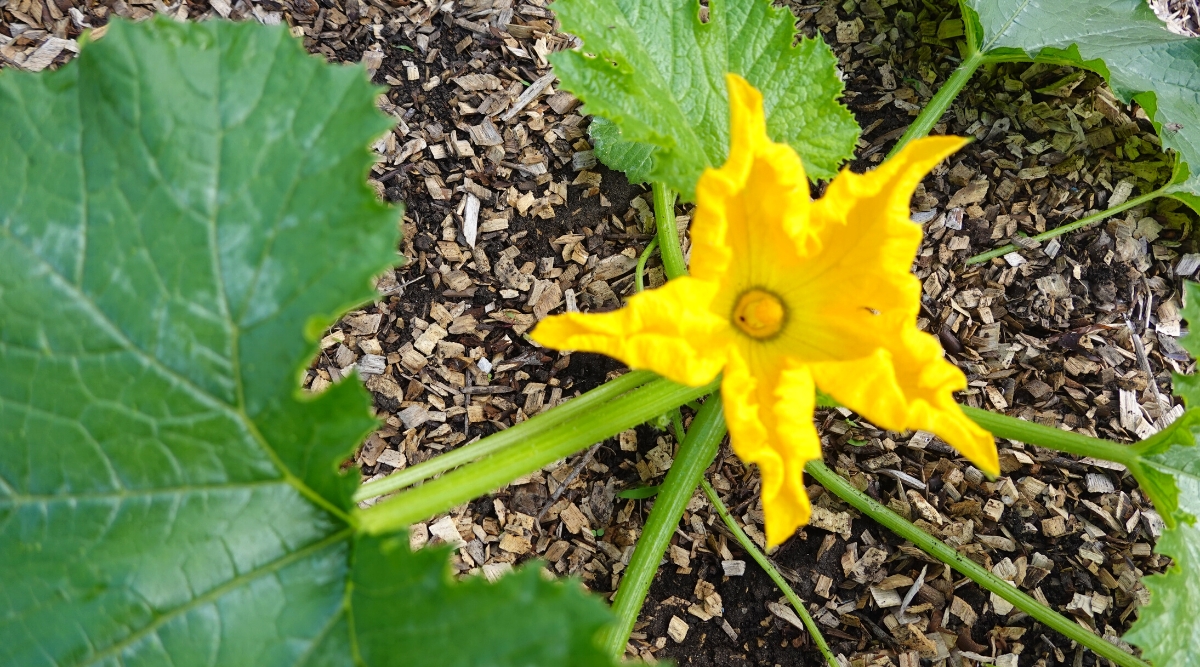
Zucchini plants are “ monoecious , ” which means that these plantsproduce separate male and female flowers . The first several bloom that bloom are virile flowers . It may be 1 to 2 weeks after the first male blossom come along until your plant produces its first female flowers . The flowers are very attractive to a large number of pollinator , which is not only swell for your squash production but also your other garden plants .
Both virile and female flower will be big , showy , and yellow - Orange River . The male heyday will appear at the end of a tenuous stem , and at the center of the efflorescence , you will see large pollen - cover anthers .
Thefemale flowers will have a miniskirt - zucchini at their baseand a prominent stain emerging from the blossom . Pollinators will visit both male and female flowers , shift pollen from the manful anther to the female stigma . If the flowers are successfully crabbed - pollenate , you will get a fruit !

Each heyday lasts for a match of days . After a couple of days of blooming , the male flowers shrink and fall off the vine . distaff flowers also wither and fall off , but if successfully pollinated , they will shape a small fruit before blow over .
When your plants start to bloom , this is a good time togive your plant life some supernumerary compost or fertiliser . It need a lot of energy for a plant to get fruits . bring some fertilizer during the flowering stage will give it an supernumerary energy rise to help it get healthy fruit . Use constituent compost or ageneral vegetable garden plant food .
Fruiting
Once your plant pop fruiting , you may expect to glean sassy courgette on a regular basis ! The distaff efflorescence are the I that have tiny fruit at the al-Qaida . So by the time your works has its first female flowers , it is already starting to bring on yield . And once the flora starts to produce , the fruit grow very quickly !
When the flowers fade , you will have tiny zucchini yield , and you could even clean them when they are low like this . you could also wait a few more daysbut do n’t wait too long . Zucchini is the most tender when pick young , within a week after flowering . If you want really big fruits , you could hold back longer , but the longer you look , the tough the fruit will be . Larger fruit will also arrest grownup seeded player which are not as appetizing .
Fruits can develop approximately an inch or more per mean solar day . You should control your summer squash plants day by day during the fruiting phase . If you bring down your garden only once per hebdomad , you will see yourself with some super - jumbo - sized zucchini . It can be middling amazing to watch how rapidly your plant can give rise an abundance of fruits .

Harvest
you may ask to harvest your first courgette fruitsapproximately 50 to 60 days after you found the ejaculate . There will , of row , be some variance in first harvest home . Plants grown in warmer climates will grow , grow , and mature sooner than plants grown in cooler climate . Similarly , healthy plant grown in idealistic consideration will produce fruits preferably than those in less - than - idealistic conditions .
For a stock farseeing green zucchini , I like topick them when they are 6 to 8 inches long . At this tip , they are still small and tender , and well-heeled to work with . Any fruit left on the works will continue growing and will get perceptibly bigger each day . Even if you find yourself with an overgrown foot - long fruit , you should still reap it so the plant continues to use its Energy Department to produce unexampled fruits .
Squash vines , stem , and leaves have sharp , stiff hairs that can bother the skin . I recommend wear out gloves when treat the plants . expend a sharp tongue to cut the prow just above the fruit . If you look at a ripe zucchini and do n’t have a knife handy , you could also firmly grok the yield and tardily twist it at the shank until it breaks away from the plant . Be trusted to check under those large leave ; a yield might be hiding underneath !

Zucchini is a soft - skinned summer squash . Winter squash vine has grueling skin and can be lay in for several months . Summer squash spoils quick and does n’t last long once reap . you could have a bun in the oven a freshly picked zucchini to last from one to two weeks — store fruit in a paper or plastic bag in the crisper drawer in your refrigerator . After one week , the skin will likely get down to shrivel , but you’re able to still eat it .
With such abundant yields , you might wonder what to do with all that produce . If you like baked goods , try fresh zucchini bread or muffins . For savory meals , chop your squash and add it to a sautee , shake - nipper , or baked veggie medley . Grill them in large clump or on a kebab . If you have eaten your fill of zucchini , give them away to your neighbour or bring your surplusage to give away at the office .
Final Thoughts
Zucchini is an easy - to - develop summer squash . This works age apace , produce big , and can be extremely productive . Zucchini plants grow pronto from seed in any quick climate , and you may watch them develop from the first sprout to the final harvest time . Give them a warm cheery spot in the garden with consistent moisture , and you ’ll be harvesting an abundance of your own stamp and tasty squash throughout the summertime !