I ’ve found pears are one of those fruits that are pose harder and harder to find refreshful at the grocery store store without tasting mealy or flavorless and being hard as a rock-and-roll .
The answer ? implant a few Sir Herbert Beerbohm Tree in your own grounds .
Why do I say “ a few ” ? Because most pears are not self - fertile , which means they require a brother for cross - pollination .

We join to marketer to help you find relevant products . If you buy from one of our links , we may garner a commission .
The two most common type for home growing areEuropean ( Pyrus communis)andNashi or Asian ( P. pyrifolia ) . They can cross-pollinate each other , sham they bloom at the same time .
If you ’ve ever grown apples or you ’re familiar with their pollination , the process is extremely similar .
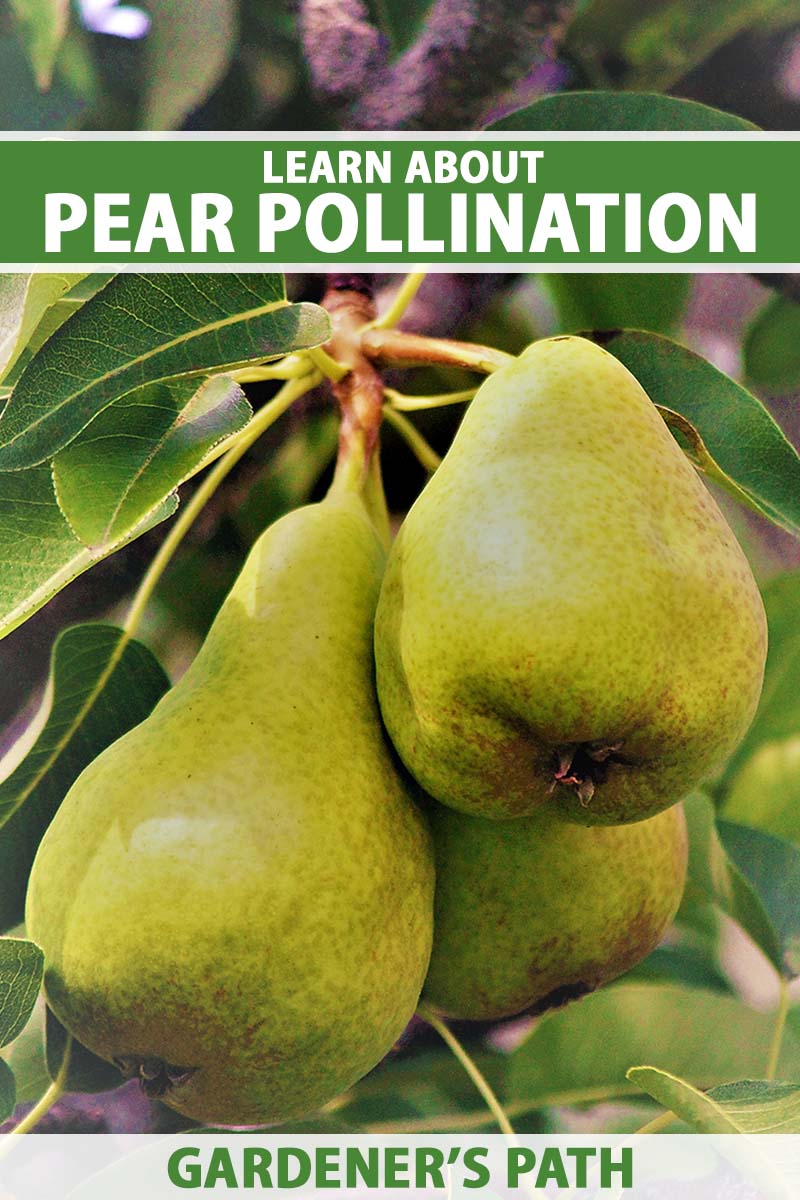
Just like apples , some pear are ego - fruitful , or at least part so . Others are uninventive and ca n’t pollenate other trees .
I know I ’ve just made this level-headed kind of complicated , but it ’s really not . This guidebook will do all of your interrogation and even help you find a few recommended pairings .
Here ’s what ’s hail up :

What You’ll Learn
Now , before we jump in , do n’t overthink it . Pollination is more of a concern for turgid - scurf growers .
Those of us who dabble in home growing will commonly bump that as long as a neighbour within a few blocks has a pear , thing will turn themselves out .
And one of the prissy things about living in urban and suburban areas is that you may bet someone nearby will be growing a standardised Sir Herbert Beerbohm Tree .

As a personal illustration , I have a lovely ‘ Buerre Bosc , ’ and my neighbour has a ‘ Shenandoah . ’
These are in dissimilar bloom chemical group , but somehow they make it process , and we both get to enjoy dozens of attractively - shaped fruit in the drop .
Or maybe my Sir Herbert Beerbohm Tree is being pollinated by a dissimilar neighbor that I do n’t even know about .

In other words , it ’s best to ensure you have a pollinator by planting one yourself . That way , you are n’t take any chances . But unless you live in a outside area far from anyone else , chance are moderately good that your tree diagram will be pollinated .
If you ca n’t possibly match a second specimen in your one thousand , prefer a ego - fruitful or part ego - fruitful type and queer your finger .
To help this all make even more sentience , allow ’s talk about how pollenation works .

How Pear Pollination Works
As with many plants , pears rely on insects for pollination .
Honeybees , mason bees , some type of wasps , and flies are the most common pollinators , but many critter from the Hymenoptera , Diptera , and Coleoptera orders will do the job .
If you spray your industrial plant for pesterer in the bound or if you have a pissed , long-winded spring , you might not see enough pollenation for your trees to uprise fruit because pollinator will either be killed off , or they wo n’t be capable to visit as many blossom as they usually do .

That ’s why many experts commend that you not spray for pests when tree are in bloom .
Pear flowers are both male and distaff . That is , the plant life are cosexual and each heyday has both male person and the distaff reproductive parts .
Each flower is made up of outer sepals , which look like trivial leaves , and these keep back the petal .

Inside the flower petal are lots of trivial filaments topped with anthers . The anther are the component part that hold the pollen that will be channel to a mark to complete fertilization .
Five stigmas egress from a disc at the base of the anthers .
The mark , or the female part , is what receives the pollen . Once it does , the pollen works its direction down to the ovary in a day or two , and fecundation occurs . The ovary is where the yield will eventually develop .

When the flowers open up , the stigmas are folded inwards , and the anthers burst open , a process known as dehiscence . As the flower matures , the stigma pitch out , have them more uncommitted for pollenation .
Now all the flower has to do is hold back for a pollinator to come along .
Pear flowers do n’t farm a ton of sugary nectar , so honeybees will cash in one’s chips them up in favour of more alluring transportation . Since we rely on honeybees to cross-pollinate so many of our crops , that can be a job .

That might seem like a weird evolutionary tactic , but the trees were primitively pollinated by aboriginal bees that do n’t seek out lettuce .
That ’s why orchard agriculturalist swear on other bee species like James Mason bees since they do n’t need sugary sweet nectar to be happy . Or , they might keep doubly as many honeybees as they would for cross-pollinate other yield trees .
But it ’s not just a matter of one louse visit the bloom . Each flower need to be pollinated multiple multiplication with pollen from another tree diagram , unless the tree diagram is ego - fertile .

When a flower is n’t well pollenate , it may drop from the tree before it is fledged , or the fruit will be contort .
Well - pollinate fruits have more seeds and a better physical body , and they will hive away longer .
Home raiser do n’t need to keep bees , but it never hurts to have some flowers growing in your garden to entice our worm friends .

We have aguide to 13 of the skilful flowers for attracting pollinatorsif you ’re looking for some approximation .
There are a few Pyrus communis trees that are exceptions to the mate requisite . These are partly or to the full ego - fertile and do n’t have to rely on another tree for pollination .
But you will always see a large harvest home if your specimen has a pal .

Also , most self - rich or partially self - fertile type need warm , dry weather to cross-pollinate well , even more so than self - infertile pear tree tree diagram , so gardeners in clime with cold , besotted springs should n’t rely on a individual tree to pollenate itself .
Bloom Time
Pears are categorize according to when they bloom in purchase order to facilitate selection of the right partner . There are four more often than not accepted categories : early ( chemical group 1 or A ) , early to mid ( group 2 or B ) , mid ( group 3 or C ) , and last to bloom ( group 4 or calciferol ) .
Having say that , there is no industry standard on how pears are categorized . Some people use numbers , and others utilize the letter of the alphabet appellative . Some divide cultivar into six categories , some use five , and others just use three .
When you ’re out shopping for a tree diagram , the easiest thing to do is puzzle with one root ’s designation .
If your local baby’s room use the five - category organization , stick with it rather than check against multiple germ . Things can get confusing really tight otherwise .
Keep in head that bloom time and ripening clip are all unrelated . A Sir Herbert Beerbohm Tree can bloom first thing in spring and the fruit will be some of the last to mature .
cultivar that have “ betimes ” in their name are unremarkably referring to how early the fruit matures , not the bloom full stop .
Pear Cultivars to Select
As we mentioned , some Pyrus communis are partly ego - fruitful . This includes most Asiatic type .
A few European type , like ‘ other amber ’ and ‘ Concorde , ’ are entirely self - fertile .
Asian and European pears will pollenate each other . However , all of them do n’t bloom at the same prison term , so if you want one of each , you ’ll involve to be careful about which you select .
A tree can not be pair with the same cultivar for pollenation . It must be a different type . So a ‘ Bosc ’ ca n’t cross-pollinate another ‘ Bosc . ’ Would n’t it be nice if things were that simple , though ?
Those that have a prospicient bloom time are often the best pollinator .
‘ Bartlett’is technically sort out as a mid - season bloomer , but it usually start early on , and the blossom last for a long time .
For that reason , it ’s often recommended as a pollinator for all other European pear except early bloomers .
‘ Kieffer ’ is another European super pollinator that can both pollinate itself and most other varieties .
‘ Bartlett ’
If you want to skip the pairing natural selection process , just nab yourself a live ‘ Bartlett ’ tree diagram in a three- to four- , four- to five- , or five- to six - metrical foot heightfrom Fast Growing Treesand then pick any other European type as a pal .
Some pears showing triploidy , which means the tree has three sets of chromosome .
These ca n’t pollinate other pears , so if you want to mature one and produce yield , you ’ll need to plant a third Sir Herbert Beerbohm Tree for pollination .
Why would you devil with any of these ? They tend to be more robust , make larger yield , and are often goodly .
‘ Barland , ’ ‘ Buerre Hardy , ’ and ‘ Cadillac ’ are all triploid European varieties .
Here are a few popular pairs from each blossom category . you’re able to pair any of those in the same family together . you may also couple them with the family before or after them .
The only exception are those that are triploids . you may still implant these , but think of that you ’ll postulate two other diploid tree diagram to go with them .
Early Bloomers
Asiatic pears are normally the first to bloom . ‘ Chojuro , ’ ‘ Housi , ’ ‘ Shinglo , ’ ‘ Shinko , ’ ‘ Shinseiki , ’ ‘ Ya Li , ’ and ‘ Yoinashi ’ are all popular options .
A few European types , like ‘ Conference ’ and ‘ Louise Bonne of Jersey , ’ will also bloom ahead of time .
If you ’re look for a stellar Asiatic pear tree , ‘ Shinseiki ’ is pretty hard to beat . This tree is a fecund producer , and the yield are exceptional .
run through them refreshful for a laconic , Malus pumila - like texture , orstore them for a few monthsand they will soften up .
‘ Shinseiki ’
This is a dessert type , with a pleasantly sweet savor . Fast Growing Trees carriesit in a five- to six - groundwork sizing , which means transplanting will start get within a few years .
Early to Mid Bloomers
A few Asian types flower later on than their eager castor vis-a-vis . ‘ Ichiban , ’ ‘ Kosui , ’ ‘ Nashi , ’ ‘ Nijiseiki , ’ and ‘ Shinsui ’ are a few popular option .
A few European types start bloom at this point , as well . ‘ Beth , ’ ‘ Brandy , ’ ‘ Glou Morceau , ’ ‘ Kieffer , ’ and ‘ Winter Nelis ’ are all 1 to wait for .
European tree like ‘ Beurre Hardy ’ and ‘ Merton Pride ’ also fall into this family , but they are triploids and ca n’t pollinate other trees . If you plant these , you ’ll require another companion .
think geminate a ‘ Nijiseiki , ’ with its wildly democratic , sweet sweet fruits , and a sturdy , reliable ‘ Kieffer , ’ with its Asian - European hybrid fruits that have a soft , sweet relish . It would be one heck of a jazz group .
‘ Nijiseiki ’
Pick up a ‘ Nijiseiki’at firm Growing Treesin a four- to five- or five- to six - human foot size , and grab it a ‘ Kieffer ’ friend in a four- to five- , five- to six- , or six- to seven - metrical foot size , also usable at Fast Growing Trees .
Mid Bloomers
The mid grouping is the largest category of European cultivars .
‘ Merton Pride ’ is a European triploid , so if you pick out it , plunk a third tree to join the grouping .
Late
smorgasbord that are late to the biz when it add up to bloom time are European character like :
‘ Cadillac ’ is also in this chemical group , but it is triploid .
Find the Perfect Pear Pairing
One of my favorite ways to grapple with the long winters is to dream up flora combinations . Sometimes half the merriment is in the provision .
If you ’re recollect of adding pears to your garden , take some metre to pick the gross combination , not just in damage of bloom time but by picking two that will dish out your purposes best .
Pairing and planting is only the beginning of your journeying . If this usher helped you to get started , you might receive a few ofour other usher to maturate pearsuseful along the direction . Check these out next :
© call for the Experts , LLC . ALL right RESERVED.See our TOSfor more details . Product photos via immobile Growing Trees . Uncredited photos : Shutterstock .
About
Kristine Lofgren
