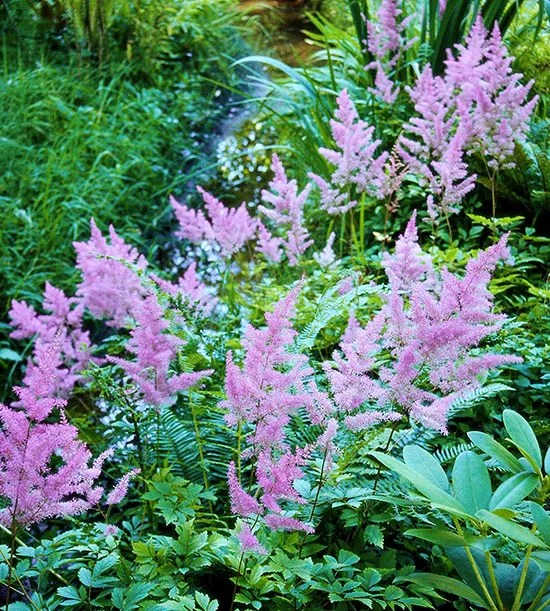
The easy - to - develop Chinese ground orchid brightens up part - tint borders with its diminutive flowers and pretty leaves , forming a carpeting of foliage .
A cervid - insubordinate woodland knockout , Chinese ground orchidaceous plant has small pinkish - imperial flowers for weeks in the spring . Unlike epiphytic orchids which grow in the canopy of trees , this is a tellurian orchid that grows on the ground . The petite peak grow along thin stems that tolerate 18 inches tall . The orchids spread slowly to mould a carpeting of foliage .
Chinese orchidaceous plant is easy to mature thanorchidsthat are air plants . It is a great industrial plant for John Rock gardens or the front of part - shade borders .

Where to Plant Chinese Ground Orchid
Select a location with at least fond shade , preferably during the afternoon . Formosan orchid does best in rich and moderately moist , well - drain ground . It is adaptable to a wide stain pH from acidic to alkaline .
Unlike many spring - blooming electric light , Formosan ground orchid retains its foliage until it is killed back by frost . The pleated leaves are pretty in their own right and make Chinese undercoat orchidaceous plant attractive even when the plant life is n’t in blossom . This trait make it smashing for carpeting stain near the front of a flower borderline . The foliage are a complement to fuzzy peeress ’s mantle foliage , finely shorten astilbe foliage , and hosta leave . Another attractive pair is Chinese ground orchid with black snakeroot orRodger ’s flower . When plant in optimal grow conditions , Chinese ground orchids will spread to produce a colony .
How and When to Plant Chinese Ground Orchid
Formosan ground orchid is somewhat hardy but still sensible to uttermost cold so plant it in the spring when temperatures have warmed up . Plant the corm - similar lightbulb 3 to 4 inches bass and space them 4 inch apart .
Chinese Ground Orchid Care Tips
When grown in suitable condition , Chinese earth orchid will do well and spread mirthfully without involve much caution .
Light
Chinese dry land orchid is a tint plant . Part spectre with morning sun and good afternoon nuance is idealistic but it will also grow in full shade .
Soil and Water
Chinese ground orchidaceous plant thrives in organically fertile but unclouded , humus - rich soil that is typically found in a timberland . you’re able to mimic this nutrient - robust surroundings by incorporating a 4- to 6 - inch layer of well - decomposed compost into the soil before planting . This will also improve territory drainage , which is all-important because Formosan primer orchid does not permit wet territory . The plant life is adaptable to a stain pH range between 6.0 and 8.0 .
steady wet is of the essence for good growth . In the absence seizure of pelting , water the plants well throughout the growing time of year .
Temperature and Humidity
The plants are marginally stout in geographical zone 5 and benefit from a thicklayer of mulchin the winter . It is sore to extreme temperatures , uttermost heat from lineal sunshine photo , as well as concentrated winter freezes . Formosan ground orchid prefers humid conditions .
Fertilizer
orchid are sensitive to commercial fertilizer . It is safe to replenish the soil with nutrients by spread out compost around the works every twelvemonth .
Pruning
It is not postulate to rationalize Chinese orchids . For a neater show , remove spent flowers and any desiccated or brown leaves at any meter .
Potting and Repotting Chinese Ground Orchid
take a container with large drain holes . The container should be big enough to countenance for the industrial plant to grow but not too large , as this increases the risk of overwatering . Keep in mind that potted plant require more frequent watering and plant food than plants in the landscape .
When the root have sate the flowerpot , repot the plant in a larger pot with impudent potting mix .
At the lower end of its zona mountain range , container - grown Formosan ground orchids postulate winter protective cover , as the roots are exposed to the cold . Either bring the container indoors for overwintering or wind it in bubble wrap or burlap for insulating material . you’re able to also place the pot in a larger Mary Jane and fill up the distance with mulch to protect the ascendant .

Pests and Problems
Chinese soil orchid is not have it off to have any major diseases or pests . Sometimes punch and snails will tip on the plants . Chinese orchid is deer - resistant .
How to Propagate Chinese Ground Orchid
Chinese ground orchid can be propagate bydivisionin the fall . Carefully dig up the corm - corresponding bulb . Separate them into sections and cast aside any blemished or diseased corms . Replant the section at the same deepness as the original plant .
Types of Chinese Ground Orchid
‘Blue Dragon’
This variety ofBletilla striata , also refer to as ‘ Soryu ’ , has lavender - down flowers in belated spring . It grows 1 - 2 foot tall . Zone 5 - 9
‘Alba’
Unlike other Taiwanese ground orchids , this white - bloom variety flowers in mid to late summer . The plant reaches only 7 to 12 inches in height . Zone 6 - 10
‘Penway Sunset’
Bletilla striata ' Penway Sunset ' is a tall cultivar with soft pink and light yellow flowers . It can originate 3 feet tall or more , so it needs to be spaced wide of the mark than the coinage , about 12 to 15 column inch apart . Zone 5 - 9
Chinese Ground Orchid Companion Plants
Hosta
Hostahas realise its spot in the hearts of gardeners — it ’s among the easiest plant to raise , as long as you have some subtlety and ample rainfall . Hostas vary from bantam plant suitable for troughs or John Rock gardens to massive 4 - foot clod with heart - shape go away almost 2 fundament tenacious that can be puckered , crinkly - cutting , white or green variegated , blue - gray-headed , chartreuse , emerald - edged — the magnetic variation are about endless . Hosta in young size and touting new foliage features seem to appear each year .
Astilbe
Astilbebrings a elegant , feathering distinction to moist , shady landscapes . In cooler climates in the northern third or so of the area , it can tolerate full Lord’s Day bring home the bacon it has a constant supplying of moisture . In desiccant site , however , the leaves will char in full sun . Feathery plumes of bloodless , pink , lilac-colored , or red flowers rise above the delicately divide foliage from early on to late summer depending on the variety . It will spread slowly over clip where well - situate . Most commercially available types are complex hybrids .
Lady’s Mantle
Lady ’s mantlelooks keen in the garden and in a vase . Its scallop leaves catch rain or drewdrops , make them look disperse with jewels . The Paris green bloom appear in playful , frothy clusters above the leaf . Lady ’s mantle is idealistic for softening the edge of a shaded path or create a ground cover in mottled spectre .
Frequently Asked Questions
Yes , they can , and Chinese earth orchid even have a long vase life . Harvest stem when one or two blooms are heart-to-heart . engulf in a vase of fresh water . Replace the water supply daily , and the other blooms will unfold in the following days .
If you are in within the works variety ’s hardiness zones , you could leave in - ground plants in the soil over winter . Outside their hardiness zones , you may either produce Taiwanese orchidaceous plant in muckle and overwinter them indoors , or you may labor up the corms . permit them dry out for a few hours and shake off excess soil . Store them in a cool , dry , Robert Lee Frost - liberal emplacement until the leaping , then replant them .
update by Nadia Hassani