Ficus benjamina
Who has n’t fantasized about bringing a stately tree diagram into their home ?
With its ability to grow tall and its traditional trunk and canopy shape , it ’s no wonder the tears fig is a valued houseplant . And it makes an excellent option to live up to this desire – with one significant caution .
Part of what give the weeping fig so sympathetic , beyond its elegant shape and cascading use , is its versatility .

Photo via Alamy.
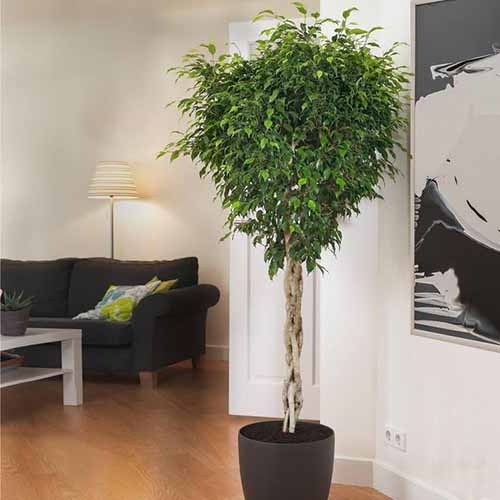
you’re able to discover specimens with braided or perverted stems , and plants that grow to heights ramble from just a few feet improbable at maturity date to 10 feet or more . The leaf can be light or dark unripened , or even vary . Some even have a more upright increment habit .
What all varieties have in vulgar is that they can be a fleck finicky . transfer them around from one side of your home to the other and they ’ll leave out their leaves . Turn the heat up in your home , and boom – folio drop curtain . Forget to water one week ? You obtain it , spend leaves .
We link to vender to help you find relevant product . If you buy from one of our links , we may earn a commission .

But that should n’t scare you away . Once you hear how to plow these special plant to the conditions they opt , you ’ll have a spectacular display .
Here ’s what we ’ll speak about to help you achieve weeping fig perfection :
What You’ll Learn
If your goal is to impart a tree into your home , you ca n’t go faulty with this one . It has the classic tree silhouette and is perfectly adapted to indoor sustenance .
allow ’s get to knowFicus benjamina .
Cultivation and History
F. benjaminais one of the hundreds of mintage intheFicusgenus , a chemical group that includes some spectacular plants , rate from the striking , Jurassic - looking violin - leaf figto the elegant weeping fig , with its flyspeck leaves .
It ’s native to Australia , India , China , southeastern Asia , and parts of the southwestern Pacific such as French Polynesia and Vanuatu . It has been introduced in warm , tropical expanse like Hawaii and has become invasive in sure areas including Cuba , parts of Asia , and the Pacific Islands of Samoa and Tonga .
Its scientific name does n’t originate from someone named Benjamin but is in all probability a reference to benzoin , a resin that the tree produces .

you may well see where the coarse name weeping Libyan Islamic Fighting Group comes from since the tree has a graciously weeping appearance . Ficus is merely Latin for Libyan Islamic Group , and you may see this species referred to by the common name benjamin common fig as well .
In its aboriginal habitat , F. benjaminahas evolved alongside parasitic WASP that do all of the pollinating .
These wasps do n’t exist alfresco of the same strong , tropical areas where the plant grow native , with just a few exclusion . If you keep your weeping fig outdoors outdoors of its native stove , do n’t expect it to bring forth viable seeds .

It may , however , form hopeful red fruit containing unimaginative seeds .
One of the so - call off strangler figs , F. benjaminastarts its life in the natural state in the branch of another tree . As it ripen , it send down long airy root that wind around the boniface tree and eventually turn over down to the soil .
These root uprise large and larger , and finally play like trunks for the works . The original host tree is often repress to death , and as it dies back , the new genus Ficus “ trunks ” take over .

The ficus will often spread to surrounding tree until it becomes one massively circularise tree diagram with multiple trunks sequester to a single canopy . These character of ficus Tree are commonly know as banyans .
Weeping Fig Propagation
There are multiple way to propagate this tree . you’re able to buy seed or a sapling , take cuttings , or even employ tune layering .
This tree is a authentic reproducer , so you ca n’t go wrong with any of these methods , though seeds have an exceedingly low germination rate .
From Seed
Though the trees may form the little pods that antecede the formation of seeds , weeping figs that are grow indoors will not bring forth executable seed since they wo n’t have access to the species of wasps that pollenate them in the wild when they are develop inside your home .
In other lyric , you ca n’t reap the immature yield from an existing Sir Herbert Beerbohm Tree and use it to pimp seeds for planting .
However , you may be able-bodied to find seeds online . Just be heedful to source your source from a reputable vender .

Check customer recapitulation , make certain the vendor has a generous return policy or warranty , and do n’t coiffe your expectations too mellow .
sprouting pace , assume you ’ve even pick up the right variety of seeds , are notoriously low .
Because these seeded player incline to be unreliable , you might want to place two or three in each container and pull all but the most full-bodied seedling if more than one seed germinates .

Plant the source half an inch deeply in a six - inch nursery container or seed starting pot occupy withpotting dirt , and keep the soil consistently moist but not wet . Place the pot in a spot with undimmed , collateral light .
executable seeds may take up to three weeks to develop . Allow the strongest seedling to grow in topographic point until it is at least six inches tall .
At that point , you could repot it into a decorative container – allow for it has fair to middling drain hole – follow the instructions outlined in the transplanting section below .

Otherwise , you’re able to look to transplant until the flora begin to outgrow its pot .
From Cuttings
cut can be taken during springtime , summer , or fall . Before you take your cutting , get up the container that you will place it in .
fulfil a six - inch container that has at least one drainage hole with a water - retentive potting culture medium , and pry a hole in the centre of attention with a pencil or chopstick . You ’ll need one toilet for each cutting .
To take a slip , use a clean , sharp twain of trimmer or secateurs . Snip a six - inch cutting with at least two leaves from the oddment of a arm .

off all but two of the leaves at the bakshish of the cutting off . We do this because the film editing ca n’t supply a large number of leaf with the nutrient and water that they take to exist . Too many leaves will fall the prospect that your stalk cutting will produce level-headed roots .
If you take multiple newspaper clipping , set up them in a glass of water until you ’re ready to plant .
Dip the end of each cut in rooting hormone powder or gelatin and place each about a third of the way late into the pot medium .

Rooting internal secretion is one of those things that you should keep in your gardening outfit for pro - level extension with a in high spirits succeeder charge per unit .
Bonide Bontone II Rooting Powder
If you do n’t already have some on helping hand , you may find Bonide Bontone IIavailable at Arbico Organicsin 1.25 - Panthera uncia containers .

irrigate the soil well and cover the cut with a clear plastic bag . grade a stick or other support in the container to prop up the bag so it does n’t tinge the cut .
Place the container or containers somewhere warm ( between 65 and 75 ° F ) where they will receive burnished , indirect light . Each solar day , lift the charge card and lightly haze over the plant .
Terrain carrieslovely atomic number 29 fog bottles that are ideal for this role .

Haws cloud Bottle
Then , stick your digit in the soil to see if the top half - inch has dried out . If it has , tally more pee to keep it moist .
Within a few weeks , your cutting should work roots . Give one a very gentle tug to see if it resists . If it does , this indicate the ontogenesis of a good for you root organisation .
hit the charge card and continue caring for your works as depict below .
Get more tips on disseminate from root word clipping here .
Air Layering
You ’re likely to have more success with stem cutting , but atmosphere layering is another option that ’s available to menage growers . While this method acting is less reliable , you will typically end up with larger transplants more rapidly than you would with cutting .
Layering should be done in the spring , when the plant is actively grow . Select a branch that is about as slurred as a pencil or chopstick and at least a foot long . Choose a layering site two to three inches from the branch lead that ’s about six inches long . Remove any leaves from this surgical incision .
Soak a handful of sphagnum moss in tepid water .

Use a uninfected , sharp knife to edit about a third of the way through the branch . Do n’t make out around the intact ramification , just make the cut on one side . You want to switch off through the barque and dark-green cambium layer to reach the light - colored wood deep down .
Insert a toothpick into the swing to shore it open , and trim the sides of the toothpick so that they do n’t cling out . Pack the moistened sphagnum moss all around the part of the branch where you made the cut .
Secure the moss in lieu with plastic wrapper . Seal the lower end of the wrap that ’s close to the joint with tape . come together the top of the plastic using a bit of string or a wrench tie , so it ’s easy to reopen when you demand to water .

Every few days , open up the top section of plastic and give the moss some moisture if it feels like it is dry to the touch . If it feels any drier than a well - wrung out sponge , add water .
do by the parent Sir Herbert Beerbohm Tree as you would ordinarily , fit in to the care instructions outlined below .
After about a month , you should see roots forming in the moss . When the roots are at least two inch long , cautiously remove the credit card and moss . Cut the branch away from the parent works the right way below where the root are emerging from the atmosphere layered section .

embed the rooted cut in its own container as you would any other transplant , follow the instructions outlined in the next section of this template .
Transplanting
I ’m go to warn you ahead of clock time so you do n’t panic : when you move your plant from its greenhouse container to a new pot , it will probably drop some leaf . You did n’t do anything amiss , it ’s just how this plant react to change .
If you could complete this process during the winter when the flora is n’t actively grow , all the well .
The good way to ward off inordinate leaf drop is to do thing slowly . First , locate the plant in its original container in the spot where you intend to keep it in your dwelling . Let it abide there for a week or two .

Next , piddle the plant thoroughly the 24-hour interval before you intend to graft it . pick out a container that is an inch or two larger than the be sess , and give it a good bush if you ’ve used the container before .
Gently press the sides of the nursery container to loosen the base chunk , and gently pull the industrial plant out .
BecauseF. benjaminaprefers to be a piddling bit rootbound , you might find you need to employ a knifelike dyad of scissor grip to cut down one side of the container to free the source musket ball .

Loosen the root orchis as much as potential . You want to further the stem to grow down and out rather than drag in up around themselves .
lay the plant life in the new container . If you need to add a little dirt to the bottom of the container so it ’s growing at the same peak as it was before , do so now .
Fill in around the root chunk with refreshful potting filth , and water well . If the soil settles , sum up a bit more .

Any potting territory that ’s give voice for houseplants will do , but if you want to go all out , combine adequate piece orchid potting medium with a urine retentive mixture such as Burpee ’s Premium Organic Potting Mix , which containscoconut coirto aid with piddle memory .
Burpee Premium Organic Potting Mix
you could grab a nine - quart bag from Burpee .

How to Grow Weeping Figs
Prepare yourself right now . When you institute your new unripe family member home , it will mislay some leaves .
Weeping figs show their stress by drop foliage . Moving it from your motorcar to the house?You’ll see leaf drop . Shifting it from one side of the house to another ? Leaf drop ensues . repot into a new container ? Yep . Leaf fall strike again .
leafage drib is usually push back by a change in the environment , so once you line up a well-chosen spot for your flora , try not to commute its growing conditions .

So , here is my number one tip for growingF. benjamina : do n’t move it ! Do n’t alter its conditions , if possible . Like its cousin the fiddle - leaf fig ( F. lyrata ) , this is a industrial plant that does n’t like variety . If you move it , it will probably survive , but it may take week or month to recover .
If you do move your industrial plant or you do call for to change its growing conditions , attempt to do so as slowly as possible . exchangeable to hardening off seedlings when you take them outside , you should seek to still the modulation to allow your plant to acclimate very gradually .
Do n’t be shocked when – not if – leaf bead happens . It ’s ok , so long as no more than one-half of the leaf settle at a time . New leaves will grow if you persist in to provide proper care . But if more than that fall , the plant might die .
So , what does appropriate care take care like ?
First , let ’s blab out about temperature . Ideally , it should be around 75 to 85 ° F during the Clarence Day and 60 to 75 ° F at night .
This specie can stand a temperature range that ’s a bit wider than this , but opine what materialize if the temps on the spur of the moment send away too humble or climb too high ? Yep , it will mislay some parting .
Appropriate light exposure is another key factor of acquire these industrial plant .
Place yours in an area that receive lots of bright , indirect sunlight . Six to eight hours offiltered sunlightper day is just right . But any direct sun will , at good , lead in folio drop . And at bad , it could sear or drink down your plant .
With too little igniter , increase will be slight and stunted , and the leave of absence will be pale than they would be otherwise . Oh yeah , and the leaves might drop in protest .
Next up is moisture . These plants should be pay weewee regularly . Allow the top two in of the grease to dry out in between watering , except during the winter , when you may allow it to dry out out by another column inch .
Err on the side of slenderly too ironical rather than too besotted if you are n’t sure exactly how much pee to provide or how often to get out thewatering can .
As with many houseplants , you should avoid watering with chlorinated or soften water . Soft water is address in a way that increases atomic number 11 layer , which can be exceedingly damaging to many types of plant .
If you remark clean spots on the leafage , it ’s likely a build up - up of residue from the mineral and chemical substance found in municipal water . In this example , flush your soil with filter pee or remove and replace the stain in the container .
Wipe off the white spots with a solution of one part bloodless acetum merge with 10 parts weewee . You should always water your houseplant at the dirt stratum rather than on the foliage .
F. benjaminawon’t survive if it has roots that are forever lactating . Always use a container that has at least one drainage yap , and select one that is only an inch or two big than the previous pot when you transpose .
Because of its resistance to change , dense - release fertiliser is the best option forF. benjamina .
Aquatic Arts Indoor Plant Fertilizer
take a mathematical product that is explicate for use on houseplants , such as Aquatic Arts Indoor Plant Fertilizer , which isavailable at Amazonin eight - ounce packages .
Apply it in the give , following the manufacturer ’s directions .
Growing Tips
Pruning and Maintenance
All houseplants go through a period where they go dormant and blockade growing for a time . But they do n’t drop their leaves like deciduous plants alfresco do .
However , cry figs may actually drop their leafage in the wintertime , despite being classified as evergreens . They do n’t typically drop all of their leaf and go wholly bare during this flow – it ’s normally more of a leaf - thinning site rather .
It can be very heavy to tell whether your tree is fell leave because of shock or a change in the environment , or if it ’s seasonal .
In the declivity , if you have n’t change its growing conditions or maintenance schedule recently , then it ’s secure to take that the leaf drop is just seasonal , particularly if only a few leaves drop .
If this is the case , stop fertilize and cut the amount of water you ’ve been provide . Your plant does n’t need as much water or any nutrient during this time , since it is basically rest .
When new leaves start to emerge in the bounce , deliver to your steady watering and feed in schedule .
When grown yr - round outside in warm regions , weeping Libyan Islamic Group can handle quite a bit of pruning , but specimen that are grown indoors are another affair all .
you may absolutely dress back an uncontrollable works and remove any leggy , stagnant , or pathologic branches , but be sure to do it slowly .
Prioritize removing any morbid or dead parts first , and then you’re able to off up to 10 percent of the remaining branch at a time . permit the tree diagram to regain for at least six calendar month before rationalize again .
Ideally , all pruning should be done in the fall or winter , but you should remove pathologic material quickly whenever it pops up .
Make your cuts using a white , sharp twain of pruner and snip near a leaf node .
If any aerial roots conformation , feel free to prune these aside .
You should repot your plant when it becomes rootbound to the point where you could see roots circling the surface of the soil or come out of the drainage hole .
At that gunpoint , remove it from the pot , brush away as much of the grime as potential , and repot it in a container that ’s one or two inches larger than the current one . These figs do better when they are slightly rootbound rather than being moved to a container that is too prominent .
Some growers wish to move their plants alfresco during the warm month , and you could certainly do this with weeping figs , if you ’d like . But be cognisant that theywilldrop leaves each time you move them .
Be sure to move them gradually , to give the plant time to acclimate to the outdoor environs . land the plant alfresco to a protected smirch for an time of day or so on the first daytime , and gradually increase the amount of time the industrial plant spend outdoors over the course of a week .
You ’ll need to reverse this process in the fall when you bring the plant back indoors .
get a line more about cut genus Ficus Sir Herbert Beerbohm Tree in our guidebook .
Cultivars to Select
Most of the time , major retailers simply sell this flora under the name Benjamin ficus or weep fig without any cultivar noted .
Benjamin Ficus with Braided Trunk
For instance , you could find a species works in a three - gal pot with a braided trunkavailable from Fast Growing Trees .
But strength retailers and greenhouse often transmit alone and attractive cultivar featuring vary foliage , dwarf sizes , and highly compact growing habits .
In the case of crying figs , “ compact maturation habit ” consult to how tightly packed the leaves are , not the size of it of the industrial plant .
Some are ideal forbonsai , while others are better off growing in a suitable mood outdoors . Speaking of which , if you wish well to grow yours outside , check out ourguide to growing weep figs out of doors .
Bushy King
‘ Bushy King ’ has leaves with yellow margins and a compendious , slow habit . The leaves are more bantam than those of the species plant .
Indoors , it stay under six feet grandiloquent , but outdoors this cultivar can acquire 14 fundament tall and full in zona 9 to 11 .
This variety is the result of a ‘ Golden King ’ mutation that was educate by growers to be sold commercially .
Bushy Prince
As is often the case with any lesser regal – at least where plant are concerned – ‘ Bushy Prince ’ is more tiny than its proportional ‘ Bushy King . ’
This diversity generally stays under 12 feet tall and eight pes wide at maturity if grow outdoors , but closer to six foot tall and four feet wide indoors .
The leave are solid , glossy , medium green , and proportionally lowly than those of other types .
Danielle
Sometimes cry Daniella genus Ficus , the dark fleeceable foliation and pallid tan branches of this cultivar are produce in a more upright mode than what you ’ll see on most others , which broadly live on up to the weeping byname .
‘ Danielle ’ stays under six feet magniloquent and spreads about three feet wide at maturity .
De Gantel
‘ De Gantel ’ is a lulu with heavily variegated gray - fleeceable leaves with creamy white accents .
It rarely originate more than five metrical foot magniloquent and has a somewhat columnar growth habit , spreading about two and a one-half feet spacious .
Exotica
This cultivar has short foliage than most others , and its tears outgrowth habit is exaggerated . But what create it truly special is the elbow room that each leaf sprain slightly . It ’s a marvel to watch the foliage dance in a wanton breeze .
‘ Exotica ’ has a rounded contour , growing up to nine feet tall and wide , and twice that alfresco .
This cultivar is slimly more frost legal tender than most , and should only be grown outdoors class - round in Zones 10 and 11 .
Golden King
The foliage on ‘ Golden King ’ is striking . The leaves are variegated with discrete light green margins and medium immature midribs .
Ideal if you have a circumscribed amount of place , this case only reaches four foot improbable and two groundwork wide .
Golden Monique
merge the size of it of the plant and the narrow , rippling leaves of ‘ Monique ’ with the golden and green coloring of ‘ Reginald ’ and you have ‘ Golden Monique . ’
This works is less prone to leaf bead , but the characteristic coloring only develops in smart , collateral light . Otherwise , it remain medium light-green .
This variety grows well in Zones 10 to 11 if you wish to implant one out of doors . Indoors,‘Golden Monique ’ will top out at four to five feet tall , and can grow up to 10 infantry tall alfresco .
Judith
‘ Judith ’ has bantam leaves that are distinctly variegate , with medium dark-green and creamy yellow splotches . If you are look for a weep fig to feature in a dimly lit part of your home , this is an excellent choice .
This one does n’t drop its leaves as pronto or as heavy as many others , as an added fillip . It ’s a stock - sized tears common fig tree , so have a bun in the oven a mature tiptop of about six feet or so indoors , bet on the grow conditions .
Midnight
A mutation of ‘ Exotica , ’ ‘ Midnight ’ has colored greenish leave-taking , but otherwise it see like its parent , with a interchangeable height and spread of nine feet marvellous and wide , and two-fold that outdoors .
It ’s extremely repellent to leaf drop , making it an excellent option for benjamin fig beginner .
Monique
On lovely ‘ Monique , ’ the deep green leaves are more minute than those of most other cultivar and the margin feature heavy rippling , with light and dark green variation .
‘ Monique ’ is less prone to leaf drop than many other types , and it grows well outdoors in Zones 10 to 11 . This cultivar will hand a fledged elevation of four to five feet marvelous when grown indoors .
Reginald
‘ Reginald ’ was initially a glad chance event , come forth after a grower name Reginald Deroose discovered a mutation on an ‘ Exotica ’ plant in Belgium , in 1986 .
With its variegate leave , featuring bright yellow gold mixed with dark green mid - veins , coupled with an highly heavy crying ontogeny habit , this plant looks like a spring burp with amber and green .
Leaves grow on the interior and plants proceed in dour locations tend to be mainly dark green , while fledged parting and plants exposed to smart light are more yellow-bellied .
This is a received - sized tears fig , so ask it to get hold of around six feet marvellous indoors .
Starlight
‘ Starlight ’ shines bright with its vibrant chickenhearted and dark-green variegated leaves .
In bright , indirect light , the leaf may be primarily scandalmongering with splotches of green . It has an particularly refined weeping use , and stay under five feet improbable and four invertebrate foot encompassing .
This cultivar grow well out of doors in Zones 9 to 11 as a bush or small tree diagram that will stay under 12 feet grandiloquent .
Too Little
‘ Too Little ’ is an endearing nanus cultivar that is incredibly pop in the bonsai world . The leaves , stanch , and body are all proportionately tiny , so the tree seems to be a completely miniaturized reading of the standard coinage .
Note that the leaves of this cultivar can sometimes revert back to a bigger size like that of the specie plant , so prune any branches you see that have produced full - sized leaf if you ’d care to keep the littler foliage .
Wasana
This cultivar is often used in make bonsai as well . The leave are extremely low and variegate , with white allowance .
‘ Wasana ’ plants stay under a few foot improbable course , but of course , they can be limited further by growing in a bonsai container .
Wintergreen
‘ Wintergreen ’ has deep , dark , shining green leaves . Despite the fact that it stay stocky at under six foot tall when mature in a container indoors , the leaves are as large as those of a standard - sized weeping fig .
This cultivar also grows well outside as a dwarf specimen in Zones 9 to 11 , where it will maturate about double as marvelous .
Managing Pests and Disease
While leaf drop due to changing environmental conditions is far more probable to induce problems for your plant than any other return , you might also kick downstairs up against a few insect .
Disease pathogens number to call even less often , but it ’s still a ripe theme to be aware of the potential culprit .
Insects
Indoor pests lack natural predator , which allow them to spread pretty much unchecked .
What ’s one of the most mutual symptoms of a pest infestation ? I ’ll give you one guess …
If you said dropping leaves , you come through ! There are a few vulgar pests that you ’ll see on indoor plants .
Aphids are super vulgar . A large infestation can cause leaf drop and chickenhearted stippling on the parting . You will most commonly see them on the green growing tip of genus Ficus plant , but they can feed anywhere .
The most common specie found indoors is the green peach aphid ( Myzus persicae ) . Spraying regularly with neem oil is a standard method acting for get by with these pests .
Because they ’re so common , you should be sure to learn how to blemish and eliminate these pests if you have n’t already .
Our article on how to trade with aphidsprovides helpful information to guide you through the process .
mealybug , insects in the mob Pseudococcidae , are another coarse type of houseplant pest . They will feed on ficus plants , using their piercing mouthpart to draw sap out of the Sir Herbert Beerbohm Tree .
When they congregate in grouping , these short wingless insect are covered in a waxy coating that makes them look more like some type of fungous disease than a pest infestation .
For more information onidentifying and dealing with mealy bug , read our guide .
plate insects attack both indoor and outdoor ficus tree . There are hundreds of specie that might tip on your works , all from the order Hemiptera , but you could deal with each of them in the same way .
If your tree diagram starts dropping leaves , expect for little dark-brown or inglorious ball on the leaves , stanch , or trunk . These are the insects .
To rid your plant life of them , wipe each dirt ball with a cotton swab that has been dunk in a bit of itch alcohol . It ’s a petty tedious , and you will need to do it again every few Clarence Shepard Day Jr. over the course of a few calendar week , but it ’s effective .
For more tips , check out our guide to descale .
wanderer touch love teetotal experimental condition , and it just so pass off that home interiors tend to be drier than the outdoors .
These tiny spider relatives will suck on your industrial plant to feed , and they leave behind extremely fine webbing – which is usually what will first tip you off to an infestation .
The red wanderer speck ( Tetranychusspp . ) is the most vernacular . Learn to handle with these teeny - tiny cuss in our templet .
Disease
F. benjaminais rarely troubled by disease . moulder solution are really the only thing you ask to watch for .
Root Rot
Root rot can be because of two issues . The first is stand water system around the roots , and the second is disease .
More specifically , root guff is do by the fungiRhizoctonia solaniandFusarium oxysporum . Both of these specie thrive in oversaturated dirt – so in other words , do n’t overwater your ficus !
Be certain to use a container that has at least one drainage kettle of fish , and empty the catchment jackpot or drainage dish antenna about half an 60 minutes after watering .
Allow the top two inches of filth to dry out before watering again , and render even less H2O in the winter .
Because it ’s inconceivable to tell with the naked middle whether this ailment has been do by a fungus or whether the roots are just drowning in too much water , you ’ll necessitate to treat for both likely causes .
First , remove the works from the pot and gargle aside all of the dirt . Trim aside any mushy or black root .
Next , treat the roots with a biofungicide . Mycostop is an fantabulous option that ’s very effective . fuse it with water according to the manufacturer ’s direction and spray the roots .
Wipe the container clean and sanitize it with a 1:10 mixture of bleach and water ( one part bleach to nine parts water ) . occupy it with fresh potting ground .
Repot the plant , and wait two weeks before treating the stain with the same biofungicide by mixing it with water and soaking the land , follow the maker ’s directions . Treat one more prison term two calendar week later .
Mycostop Biofungicide
Mycostop is in effect against a number of unlike fungal diseases , so it ’s handy to keep around . Pick some up in five- or 25 - gm packets at Arbico Organics .
Find our elaborated guide on foreclose and handle source rot here .
Best Uses for Weeping Figs
F. benjaminais a beautiful choice for bonsai because it is one of those few trees that can stay indoors all class - pear-shaped , but it ’s also adorable when planted in a small group in a undivided container , normally with the stems lace together .
And of row , it ’s perfect as a individual specimen in a container as well .
Quick Reference Growing Guide
Find Success with Weeping Figs
Weeping figs have a bad repute among some growers . They ’re known for dropping their leaves at the slight provocation – and many indoor plant partizan have repair to placing unreal ones in their domicile to avoid unneeded cleansing .
Hopefully this pathfinder has put you on the road to winner with this elegant houseplant . have it off what to take in for , and what to annul , drop dead a long way towards making your industrial plant happy .
If you ’d like toadd a few more ficus plantsto your collection , you might be interested in some of our other guides next :
© Ask the Experts , LLC . ALL RIGHTS RESERVED.See our TOSfor more contingent . Product photos via Arbico Organics , Aquatic Arts , Burpee , FastGrowingTrees.com , Hirt ’s Garden Store , and JM Bamboo . Uncredited photos : Shutterstock .
About
Kristine Lofgren
